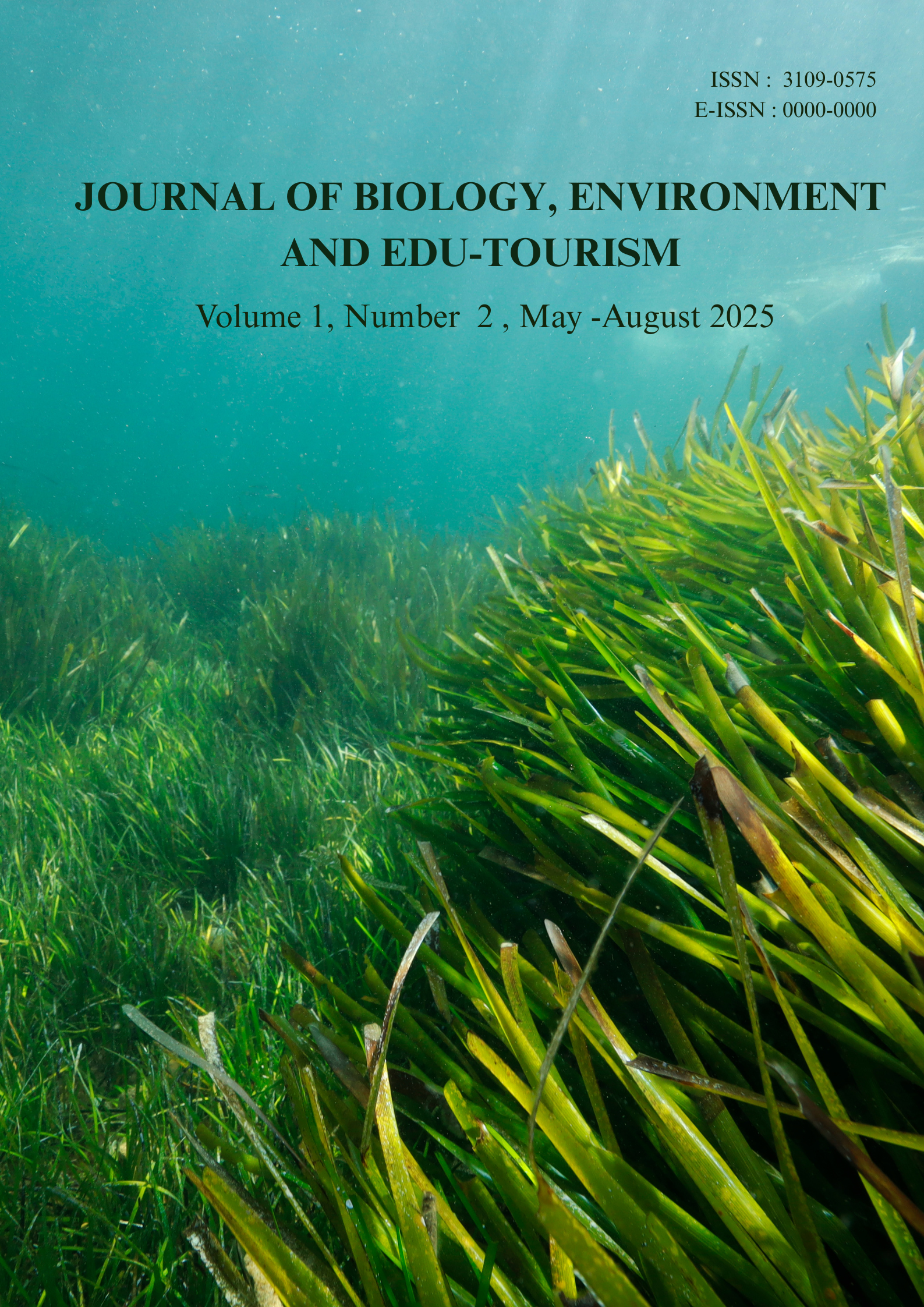
Economic Empowerment of Coastal Communities Through Sustainable Marine Ecotourism Management in Gili Balu, West Sumbawa Regency
Downloads
Abstract
Gili Balu in West Sumbawa Regency has significant potential for developing sustainable marine ecotourism that can drive the economic empowerment of coastal communities. This study aims to develop an economic empowerment model based on ecotourism management with active community involvement. A case study method with a qualitative approach was employed through in-depth interviews, direct observations, and analysis of policy documents. The findings reveal that community participation in ecotourism management enhances awareness of natural resource conservation and provides economic benefits. However, challenges remain, including low entrepreneurial capacity, inadequate infrastructure, and social exclusion in tourism area management. The main recommendations are the establishment of the Merah Putih Cooperative as a platform for community participation, improvement of education and training programs, as well as strengthening digital promotion and infrastructure development. The study concludes that integrating environmental conservation with the enhancement of local economic capacity is key to sustaining ecotourism in Gili Balu. These findings imply the need for policies that support collaborative, community-based, and locally adaptive management to preserve ecosystems while improving the livelihoods of coastal communities.
Keywords:
coastal communities economic empowerment Gili Balu marine ecotourism sustainable managementReferences
Abidin, Z., Rahmad, V., Hamid, S., Anandya, A., Purwanti, P., Sofiati, D., Wardani, M., & Supriyadi, S. (2024). Digital marketing strategy development for recovery ecotourism visit after COVID-19 pandemic: A comparison study on BJBR and Kampung Blekok Mangrove Ecotourism, Indonesia. Agris on-line Papers in Economics and Informatics. https://doi.org/10.7160/aol.2024.160401.
Alemayehu, S. (2024). Opportunities and challenges of community participation in community-based ecotourism development. Jurnal Kepariwisataan: Destinasi, Hospitalitas dan Perjalanan. https://doi.org/10.34013/jk.v8i2.1650.
Bagus, G., Utama, R., Junaedi, W., Putu, N., & Krismawintari, D. (2024). Determinants of community participation in ecotourism programs in Bali, Indonesia. International Journal of Advances in Applied Sciences. https://doi.org/10.11591/ijaas.v13.i2.pp260-268.
Biradar, S. (2024). The role of ecotourism in promoting sustainable development. ShodhKosh: Journal of Visual and Performing Arts. https://doi.org/10.29121/shodhkosh.v5.i6.2024.4169.
Carvache-Franco, M., Carvache-Franco, O., & Carvache-Franco, W. (2020). Exploring the satisfaction of ecotourism in protected natural areas. Geojournal of Tourism and Geosites, 29, 672-683. https://doi.org/10.30892/gtg.29223-498.
Casimiro, D., Ventura, M., Botelho, A., & Guerreiro, J. (2023). Ecotourism in Marine Protected Areas as a tool to valuate natural capital and enhance good marine governance: A review., 9. https://doi.org/10.3389/fmars.2022.1002677.
Cheraghzadeh, M., Rahimian, M., & Gholamrezai, S. (2023). Effective factors on tourist satisfaction with the quality of ecotourism destination: evidence from Iran. Environment, Development and Sustainability, 1-28. https://doi.org/10.1007/s10668-023-03837-2.
Damanik, S., Rozalina, R., & Nurrachmania, M. (2021). Influence of sipinsur ecotourism area business opportunity on regional development in humbang hasundutan regency. International journal of business and economics, 4. https://doi.org/10.31295/IJBEM.V4N1.1336.
Farid, A., Arisandi, A., Faridy, A., & Priyanto, M. (2023). Development of Mangrove Ecotourism Based on the Tourist Perspective in Lembung Village, Indonesia. Journal of Environmental Management and Tourism. https://doi.org/10.14505/jemt.14.2(66).12.
Gutierrez, E. (2023). Re-examining the participation and empowerment nexus: Applications to community-based tourism. World Development Perspectives. https://doi.org/10.1016/j.wdp.2023.100518.
Habchak, N., & Dubis, L. (2022). Analysis of ecotourism infrastructure within the nature-protected areas of the Transcarpathian region (on the example of National Nature Park “Synevyr”). Journal of Geology, Geography and Geoecology. https://doi.org/10.15421/112203.
Haerunnisa, I., Wahyuni, E., Royanow, A., & Info, A. (2024). The Utilization of Digital Media in Marketing Ecotourism Packages in Sekotong, Lombok Barat Regency, NTB Province, Indonesia. International Journal of Geotourism Science and Development. https://doi.org/10.58856/ijgsd.v4i1.52.
Ivasciuc, I., Constantin, C., Candrea, A., & Ispas, A. (2024). Digital Landscapes: Analyzing the Impact of Facebook Communication on User Engagement with Romanian Ecotourism Destinations. Land. https://doi.org/10.3390/land13040432.
Kim, M., Xie, Y., & Cirella, G. (2019). Sustainable Transformative Economy: Community-Based Ecotourism. Sustainability. https://doi.org/10.3390/su11184977.
Le, T. (2024). Influences of the ecotourism industry in Mekong Delta – Vietnam: The mediating role of Tourist Satisfaction. Cogent Business & Management, 11. https://doi.org/10.1080/23311975.2024.2353570.
Malek, A., & Costa, C. (2015). Integrating Communities into Tourism Planning Through Social Innovation. Tourism Planning & Development, 12, 281 - 299. https://doi.org/10.1080/21568316.2014.951125.
Menbere, I. (2018). Community Based Ecotourism and Its Role in Local Benefit and Community Perceptions of Resource Conservation: A Case Study in Adaba-Dodola Districts, South Ethiopia. Journal of Tourism, Hospitality and Sports, 38, 15-28.
Nababan, Y. (2023). Scuba Diving As Sustainability Economic Marine Ecotourism. Journal Of Oceanography And Aquatic Science. https://doi.org/10.56855/joane.v1i2.338.
Novianty, E. (2025). The Influence of Community Participation in Sustainable Tourism Management at Local Destinations: A Bibliometric Analysis. Journal of Public Representative and Society Provision. https://doi.org/10.55885/jprsp.v5i1.523.
Nurhayati, A., Aisah, I., & Supriatna, A. (2019). Model Development of A Synergistic Sustainable Marine Ecotourism—A Case Study in Pangandaran Region, West Java Province, Indonesia. Sustainability. https://doi.org/10.3390/SU11123418.
Okazaki, E. (2008). A Community-Based Tourism Model: Its Conception and Use. Journal of Sustainable Tourism, 16, 511 - 529. https://doi.org/10.1080/09669580802159594.
Pramana, I., Leksono, A., & Djati, M. (2019). Strategies to Introducing Ecotourism Concept with Social Media for College Student in Malang. Journal of Indonesian Tourism and Development Studies. https://doi.org/10.21776/ub.jitode.2019.07.02.01.
Pratama, P., , P., Apriani, Z., Rosmawati, E., & Yani, D. (2023). Instagram social media development strategy for promotional facilities and local wisdom potential in ecotourism-based coffee villages in Mekarbuana Village Karawang. International Journal of Economics and Management Research. https://doi.org/10.55606/ijemr.v2i1.61.
Prihanta, W., Zainuri, A., Hartini, R., Syarifuddin, A., & Patma, T. (2020). Pantai Taman-Pacitan ecotourism development: Conservation and community empowerment orientation., 1, 1-16. https://doi.org/10.22219/JCSE.V1I1.11515.
Rogos, E., Ngui, K., & Jee, T. (2021). Factors influencing community participation in Community-Based Ecotourism in Padawan, Sarawak. SHS Web of Conferences. https://doi.org/10.1051/shsconf/202112403005.
Runtiko, A., Rosyadi, S., Yamin, M., & Hidayat, A. (2024). Social Media as A Strategic Communication Tool in The Development and Promotion of Ecotourism (The Case of a Small and Medium Ecotourism Enterprise in Pangalengan, West Java). Sodality: Jurnal Sosiologi Pedesaan. https://doi.org/10.22500/11202347603.
Sarangi, A., & Ghosh, P. (2025). The Impact of Tourist Satisfaction on Loyalty in Ecotourism Destination: A Mediation Approach. Atna Journal of Tourism Studies. https://doi.org/10.12727/ajts.33.12.
Suwanan, A., Sayono, J., Nuraini, F., & Adi, D. (2024). The Influence of Local Business Behaviour on Community Participation, Social Capital, Economic Costs, and Environmental Costs in Controlling the Environment Towards Sustainable Ecotourism. IOP Conference Series: Earth and Environmental Science, 1290. https://doi.org/10.1088/1755-1315/1290/1/012029.
Tang, S. (2019). Capacity Building of Community-based Ecotourism in Developing Nations: A Case of Mei Zhou, China. Proceedings of the 1st International Conference on Business, Economics, Management Science (BEMS 2019). https://doi.org/10.2991/BEMS-19.2019.105.
Utami, P., & Mardiana, R. (2017). The Relationship of Community’s Participation with The Sustainability of Ecology, Sosio-Culture and Economic in Marine Ecotourism., 1, 509-522. https://doi.org/10.29244/JSKPM.1.4.509-522.
Xaba, F., Adanlawo, E., & Nkomo, N. (2024). Are local communities participating in ecotourism projects?. International Journal of Business Ecosystem & Strategy (2687-2293). https://doi.org/10.36096/ijbes.v6i3.492
License
Copyright (c) 2025 jalaluddin sei

This work is licensed under a Creative Commons Attribution 4.0 International License.