Ethnobotanical Diversity and Local Knowledge of Komak Plants (Fabaceae) in West Lombok Regency, Indonesia
DOI:
10.65622/ijtb.v2i1.277Downloads
Abstract
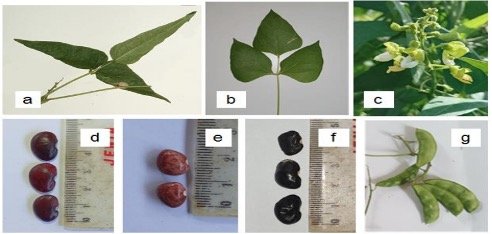
Komak plants are local legume species (Fabaceae) widely distributed in West Lombok Regency and traditionally utilized by local communities. Ethnobotanical studies are important to document the relationship between communities, plant resources, and environmental knowledge that supports sustainable use of local biodiversity. This study aimed to analyze the morphological diversity, utilization patterns, and environmental wisdom associated with komak plants in West Lombok. Data were collected through field observations and semi-structured interviews using purposive and snowball sampling techniques across ten sub-districts. The results identified three main komak species utilized by the community, namely Lablab purpureus, Phaseolus lunatus L., and Canavalia ensiformis (L.) DC. Within the Lablab group, three variants were recorded: L. purpureus subsp. uncinatus Verdc., L. purpureus subsp. purpureus, and L. purpureus var. typicus. Community utilization of komak was classified into six categories: food, traditional medicine, traditional ceremonies, ecological functions, economic functions, and animal feed. The highest Index of Cultural Significance (ICS) was recorded for L. purpureus subsp. purpureus (59), while C. ensiformis showed the lowest value (4). In addition, komak management reflects local environmental wisdom, including mutual cooperation during harvest, traditional seed storage, and ecological adaptation practices that support the sustainability of local agroecosystems.
Keywords:
Ethnobotany Komak Local wisdomReferences
Abas, A., Aziz, A., & Awang, A. (2022). A Systematic Review on the Local Wisdom of Indigenous People in Nature Conservation. Sustainability, 14(6), 3415. https://doi.org/10.3390/su14063415
Abubakari, H. (2025). Folktales for Environmental Conservation: From Oral Traditions to Ecological Wisdom. African Studies, 84(1–2), 68–87. https://doi.org/10.1080/00020184.2025.2523518
Ahmad, Z., Kumari, R., Mir, B., Saeed, T., Firdaus, F., Vijayakanth, V., Keerthana, K., Ramakrishnan, M., & Wei, Q. (2025). Bamboo for the Future: From Traditional Use to Industry 5.0 Applications. Plants, 14(19), 3019. https://doi.org/10.3390/plants14193019
Amaro, M., & Fatimah, A. I. F. (2025). Aren Palm-Based Product Development Strategy to Support Agrotourism in Kekait, West Nusa Tenggara, Indonesia. Indonesian Journal of Tropical Biology, 1(3), 116–121. https://doi.org/10.65622/ijtb.v1i3.181
Barrett, E. (2024). Neglected and Underutilized Species: Promoting Valuable Crops in Organic Agroforestry Systems (pp. 101–126). https://doi.org/10.1007/978-3-031-54270-1_4
Bharathi, V. D., Viji, C. P. & Sujatha, A. (2020) Morphological Basis of Resistance Against Maruca vitrata (G) in Indian Bean, Lablab purpureus var. typicus (L). Journal of Entomology and Zoology Studies, 8 (1): 1587-1591. www.entomoljournal.com.
Budiman, M. A. K., & Oue, H. (2025). Integrating Indigenous Knowledge into Sustainable Forest Management for Climate Change Adaptation and Mitigation Strategies: Case from Southern Slopes of Mount Slamet, Indonesia. Jurnal Manajemen Hutan Tropika (Journal of Tropical Forest Management), 30(1), 41–60. https://doi.org/10.7226/jtfm.31.1.41
Carvajal, M. A., Quiroz, M., Alaniz, A. J., Vergara, P. M., Valenzuela-Aguayo, F., & Hidalgo-Corrotea, C. (2025). The global land-water-climate nexus of drought-tolerant succulent plants for bioenergy in abandoned croplands and arid marginal lands. Journal of Environmental Management, 379, 124747. https://doi.org/10.1016/j.jenvman.2025.124747
Chitete, M. M. N., Damazio, C., Kang’oma, C., Mgomezulu, W. R., Kawaye-Chimseu, P., Chilongo, T., & Pangapanga-Phiri, I. (2026). Climate-induced shocks and the resilience of legume value chains in the Southern Africa Development Community (SADC) region: a systematic review. Cogent Food & Agriculture, 12(1). https://doi.org/10.1080/23311932.2026.2660377
Corroto, F., & Macía, M. J. (2021). What Is the Most Efficient Methodology for Gathering Ethnobotanical Data and for Participant Selection? Medicinal Plants as a Case Study in the Peruvian Andes. Economic Botany, 75(1), 63–75. https://doi.org/10.1007/s12231-021-09514-7
Deshmukh, A. J., et al (2012). Screening of Indian Bean (Lablab purpureus L.) Varieties/Germplasms Against Anthracnose (Colletotrichum Gloeosporioides Penz. and Sacc.) Under Field Conditions. Jbiopest, 5: 50-52.
Farooq, U., Noor, L., Raza, M. Y., Ahmed, M., & Imtiaz Rashid, M. (2026). Building resilience for food and nutrition security: focusing on low-input cropping systems. In Sustainable Cropping Systems Under a Changing Climate (pp. 373–386). Elsevier. https://doi.org/10.1016/B978-0-443-34252-3.00010-X
Handayani, A. F., Sukiman, S., Sukenti, K., Julisaniah, N. I., & Kurnianingsih, R. (2024). Ethnobotanical Study of Komak Plants in East Lombok Regency. Samota Journal of Biological Sciences, 3(1), 1–18. https://doi.org/10.29303/sjbios.v3i1.3337
Hassan, M., Mir, T. A., Jan, M., Amjad, M. S., Aziz, M. A., Pieroni, A., Vitasović-Kosić, I., & Bussmann, R. W. (2024). Foraging for the future: traditional culinary uses of wild plants in the Western Himalayas–Kashmir Valley (India). Journal of Ethnobiology and Ethnomedicine, 20(1), 66. https://doi.org/10.1186/s13002-024-00707-7
Jalca, A., Lopez, M., Sotelo, F., & Raymundo, C. (2020). Adoption of Snowball Sampling Technique with Distance Boundaries to Assess the Productivity Issue Faced by Micro and Small Cocoa Producers in Cusco (pp. 945–951). https://doi.org/10.1007/978-3-030-25629-6_147
Kinnunen, P., Guillaume, J. H. A., Taka, M., D’Odorico, P., Siebert, S., Puma, M. J., Jalava, M., & Kummu, M. (2020). Local food crop production can fulfil demand for less than one-third of the population. Nature Food, 1(4), 229–237. https://doi.org/10.1038/s43016-020-0060-7
Kropi, K., Jastone, K. P., Kharumnuid, S. A., Kumar Das, H., & Naga, M. M. (2024). Cross-cultural study on the uses of traditional herbal medicine to treat various women’s health issues in Northeast India. Journal of Ayurveda and Integrative Medicine, 15(5), 101024. https://doi.org/10.1016/j.jaim.2024.101024
Lwoga, E. T., Ngulube, P., & Stilwell, C. (2010). Managing indigenous knowledge for sustainable agricultural development in developing countries: Knowledge management approaches in the social context. International Information & Library Review, 42(3), 174–185. https://doi.org/10.1080/10572317.2010.10762862
Mahanta, D. K., Bhoi, T. K., Samal, I., & Komal, J. (2025). Mapping the research landscape on forest insects: bibliometric approach from 2010 to 2024. Discover Forests, 1(1), 5. https://doi.org/10.1007/s44415-025-00005-4
Martinez-Castillo, J., Zizumbo-Vilarreal, D., Perales Rivera, H., & Colunga-Garciamarin, P. (2003). Intraspecific diversity and Morpho- Phenological variation in Phaseolus lunatus L. from Yucatan Peninsula, Mexico, Economic Botany 58(3): 354-380. https://doi.org/10.1663/0013
Melese, M., Getachew, B., Woldemeskel, E., & Gunnabo, A. H. (2025). Legume integration in smallholder farming systems for food security and resilience to climate change. PLOS One, 20(8), e0327727. https://doi.org/10.1371/journal.pone.0327727
Mishra, A., Swamy, S. L., Thakur, T. K., Bhat, R., Bijalwan, A., & Kumar, A. (2021). Use of Wild Edible Plants: Can They Meet the Dietary and Nutritional Needs of Indigenous Communities in Central India. Foods, 10(7), 1453. https://doi.org/10.3390/foods10071453
Mukkun, L., KLEDEN, Y. L., & SIMAMORA, A. V. (2021). Detection of Spodoptera frugiperda (J.E. Smith) (Lepidoptera: Noctuidae) in maize field in East Flores District, East Nusa Tenggara Province, Indonesia. International Journal of Tropical Drylands, 5(1). https://doi.org/10.13057/tropdrylands/t050104
Muliadi, I., Irama, A., & Zana, M. Z. N. (2026). Analysis of Ecotourism-Based Science Learning Materials: A Case Study of Tourism in Pemepek Village. Journal of Biology, Environment, and Edu-Tourism, 2(1), 211–219. https://doi.org/10.65622/jbee.v2i1.258
Naeem, M., Shabbir, A., Aftab, T., & Khan, M. M. A. (2023). Lablab bean (Lablab purpureus L.)—An untapped resilient protein reservoir. In Neglected and Underutilized Crops (pp. 391–411). Elsevier. https://doi.org/10.1016/B978-0-323-90537-4.00018-1
Neneng, L., Nawan, N., Naibaho, F. G., Rahman, S., Septya, L., Panjaitan, D., Lestari, R. W., Irsyam, A. S. D., Norwahyunie, N., & Noraini, N. (2025). Botanical survey of ethnomedicines in Dayak sub-ethnic groups, Ot Danum and Tomum in Central Kalimantan, Indonesia. Biodiversitas Journal of Biological Diversity, 26(1). https://doi.org/10.13057/biodiv/d260145
Saensouk, P., Saensouk, S., Boonma, T., Hanchana, K., Rakarcha, S., Maknoi, C., Chanthavongsa, K., & Jitpromma, T. (2025). Ecological Analysis and Ethnobotanical Evaluation of Plants in Khanthararat Public Benefit Forest, Kantarawichai District, Thailand. Forests, 16(6), 1012. https://doi.org/10.3390/f16061012
Salgotra, R. K., & Chauhan, B. S. (2023). Genetic Diversity, Conservation, and Utilization of Plant Genetic Resources. Genes, 14(1), 174. https://doi.org/10.3390/genes14010174
Sari, N. M., Mahrus, M., M. Rata, & Nugroho, F. H. (2026). The Use of Mind Maps and Educational Snakes and Ladders to Overcome Learning Difficulties in Acids and Bases. Indonesian Journal of Educational Innovation, 2(1), 71–79. https://doi.org/10.65622/ijtb.v1i3.181
Suharjanto, T. (2010). Respon Hasil Kacang Komak terhadap Intensitas cekaman Kekeringan. Agrika, 4 (1): 30-36. DOI: https://doi.org/10.31328/ja.v4i1.146.
Sukenti, K., Hakim, L., Indriyani, S., Purwanto, Y., & Matthews, P. J. (2016). Ethnobotanical study on local cuisine of the Sasak tribe in Lombok Island, Indonesia. Journal of Ethnic Foods, 3(3), 189–200. https://doi.org/10.1016/j.jef.2016.08.002
Sukenti, K., Julisaniah, N. I., Sukiman, S., & Kurnianingsih, R. (2022). Exploration in utilization of Lablab purpureus (L.) Sweet in Central Lombok Regency as a support in food security based on local germplasm management and conservation. Jurnal Biologi Tropis, 22(3), 999–1007. https://doi.org/10.29303/jbt.v22i3.4145
Vanlauwe, B., Hungria, M., Kanampiu, F., & Giller, K. E. (2019). The role of legumes in the sustainable intensification of African smallholder agriculture: Lessons learnt and challenges for the future. Agriculture, Ecosystems & Environment, 284, 106583. https://doi.org/10.1016/j.agee.2019.106583
Waongo, A., et al. (2019). Effects of PICS bags on insect pests of sorghum during long-term storage in Burkina Faso. Journal of Stored Products Research, 83: 261–266. https://doi.org/10.1016/j.jspr.2019.07.01.
Verma, V. K., Rymbai, H., & Baiswar, P. (2023). Genetic Resources of Vegetable Crops: A Potential Source of Nutrition and Entrepreneurship in North-Eastern Region of India. In Vegetables for Nutrition and Entrepreneurship (pp. 311–338). Springer Nature Singapore. https://doi.org/10.1007/978-981-19-9016-8_15
Yuliani, N., Faridatunnisa, & Hidayatullah, L. F. J. (2026). Ecotourism-Based Contextual Science Learning: The Potential of Sade Village as an Outdoor Science Laboratory. Journal of Biology, Environment, and Edu-Tourism, 2(1), 203–210. https://doi.org/10.65622/jbee.v2i1.249
Zhu, Y.-G., Peng, J., Chen, C., Xiong, C., Li, S., Ge, A., Wang, E., & Liesack, W. (2023). Harnessing biological nitrogen fixation in plant leaves. Trends in Plant Science, 28(12), 1391–1405. https://doi.org/10.1016/j.tplants.2023.05.009
License
Copyright (c) 2026 Syilvia Fulan Tania, Kurniasih Sukenti, Sukiman, Florence Kelanit Rutselin

This work is licensed under a Creative Commons Attribution 4.0 International License.