Integrating a Deep Learning Approach to Strengthen Science Literacy and Learning Motivation in Junior High Schools
Published:
2026-02-28Downloads
Abstract
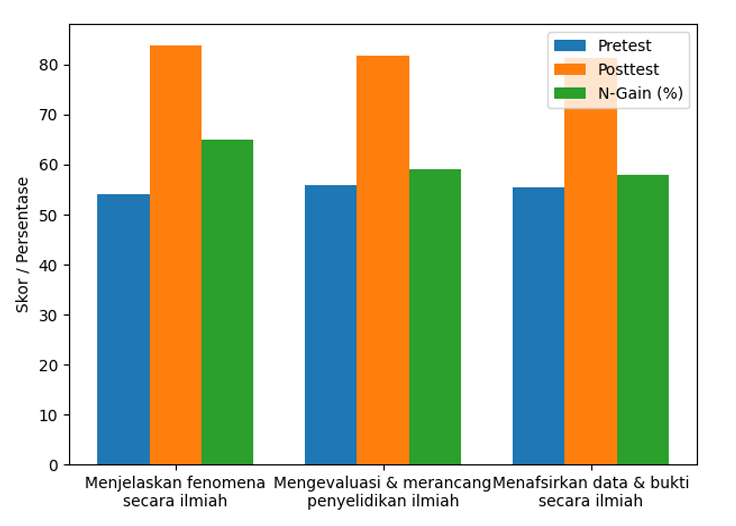
Improving students’ scientific literacy and learning motivation remains a major challenge in junior high school science education. This study aimed to analyze the improvement of students’ scientific literacy and learning motivation after the implementation of a deep learning approach in science learning. The study employed a quantitative method using a one-group pretest–posttest design involving 50 seventh-grade students at SMP Islam As-Sunnah Bagik Nyaka. Data were collected through a scientific literacy test administered before and after the learning process, as well as a learning motivation questionnaire based on the ARCS model. Data were analyzed using descriptive statistics and normalized gain (N-Gain) analysis. The results showed that the average scientific literacy score increased from 55.12 on the pretest to 82.37 on the posttest, with an N-Gain value of 60.70%, categorized as moderate and meeting the criteria for effective classical mastery. In addition, students’ learning motivation achieved an average score of 83, categorized as good, with the attention and satisfaction aspects reaching very good levels. These findings indicate that the deep learning approach has the potential to enhance students’ scientific literacy and learning motivation. This study implies that the deep learning approach can be considered an alternative instructional strategy for science learning that promotes meaningful learning, active engagement, and sustained motivation.