The Elementary School Teachers’ Perceptions of The Implementation of Sasak Culture-Based Learning in West Lombok
DOI:
10.65622/ijei.v1i3.157Downloads
Abstract
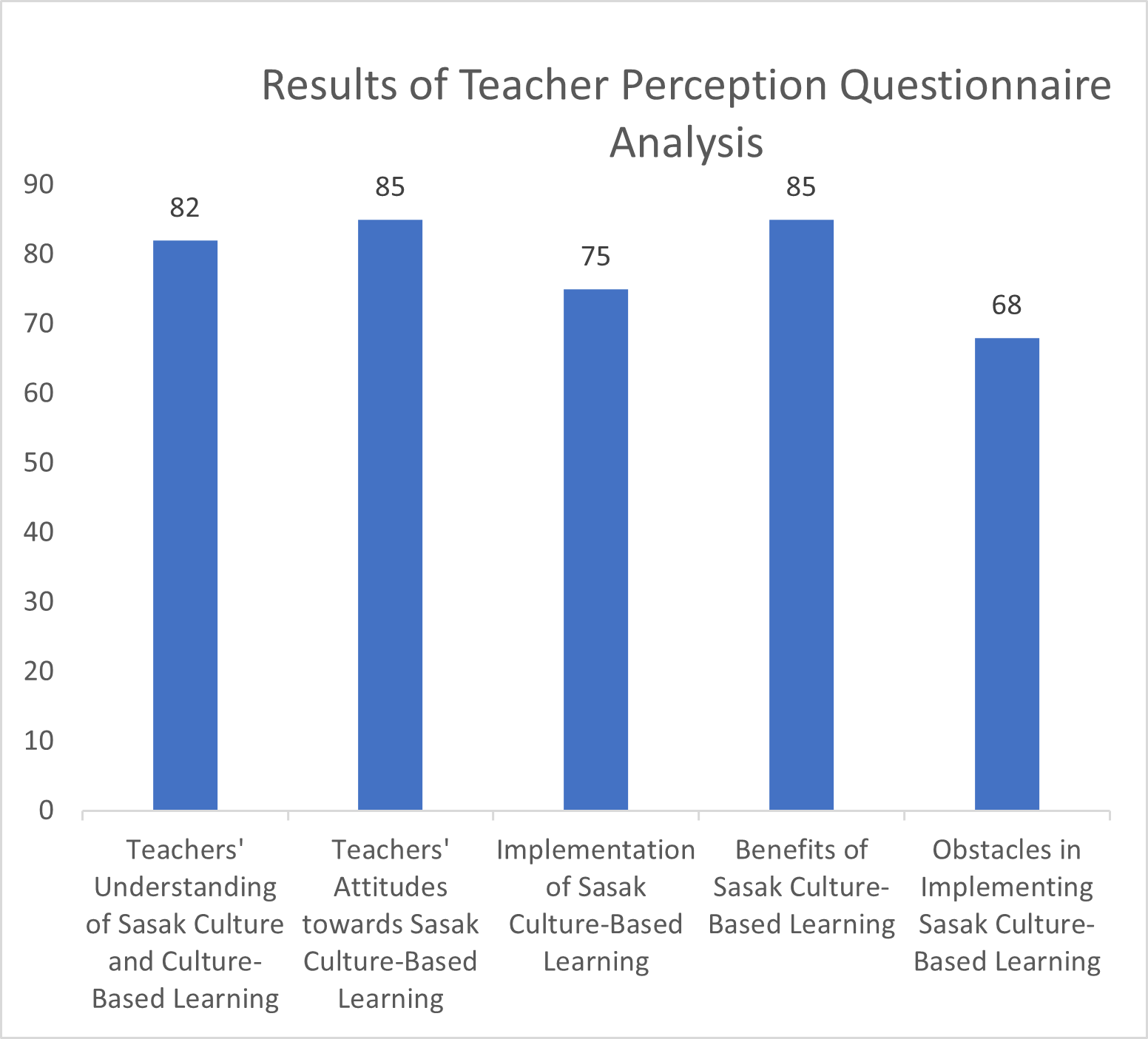
Culture-based learning is an approach designed to embrace students’ cultural diversity. This study aimed to explore elementary school teachers’ perceptions in West Lombok Regency regarding the integration of culture into science education. A quantitative survey method was employed, with data collected via questionnaires using a Likert scale. The analysis involved both descriptive and quantitative techniques, calculating the percentage of responses in each category for every indicator. Findings revealed that teachers’ understanding of Sasak culture and culture-based learning was excellent, with 82% recognition. Their attitudes toward Sasak cultural integration were also highly positive, at 85%. The implementation of Sasak culture-based learning was successful at a 75% (good), while the perceived benefits scored 85% (very good). Obstacles encountered during implementation scored 68%, indicating a good level. These results aim to provide insight into teachers’ comprehension, acceptance, and application of local culture in education, and to inform curriculum development, teacher training, and the creation of culturally relevant teaching materials.
Keywords:
Culture-based learning Etnopedagogy Integration of Sasak culture in learning Local wisdomReferences
Apdelmi, Sutimin, L. A., & Djono. (2025). Interactive Local Wisdom-Based History Teaching Material: Enhancing Cultural Understanding Among Senior High School Students in Kerinci. Educational Process: International Journal, 15. https://doi.org/10.22521/edupij.2025.15.159
Budiaji, W. (2013). The Measurement Scale and The Number of Responses in Likert Scale. Jurnal Ilmu Pertanian Dan Perikanan Desember, 2(2), 125–131. https://doi.org/10.31227/osf.io/k7bgy
Çakmak, F., Namaziandost, E., & Kumar, T. (2021). CALL‐enhanced L2 vocabulary learning: Using spaced exposure through CALL to enhance L2 vocabulary retention. Education Research International, 2021(1), 5848525. https://doi.org/10.1155/2021/5848525
Chang, F., & Muñoz, M. A. (2006). School personnel educating the whole child: Impact of character education on teachers’ self-assessment and student development. Journal of Personnel Evaluation in Education, 19(1–2), 35–49. https://doi.org/10.1007/s11092-007-9036-5
Darojah, R. (2021). Persepsi Guru Sekolah Dasar terhadap Integrasi Budaya pada Pembelajaran Bahasa Indonesia. Edukatif : Jurnal Ilmu Pendidikan, 3(6), 3748–3757. https://doi.org/10.31004/edukatif.v3i6.1202
Dasmo, D., Okyranida, I. Y., Fitrian, A., Mulyaningsih, N. N., Widiyatun, F., & Astuti, I. A. D. (2022). Analisis Persepsi Kebutuhan Guru SMA dalam Mengimplementasikan Model Project Based Learning (PjBL) Terintegrasi Budaya Lokal. JIPFRI (Jurnal Inovasi Pendidikan Fisika Dan Riset Ilmiah), 6(2), 113–118. https://doi.org/10.30599/jipfri.v6i2.1757
Delle, A., Amir, J., Mahande, R. D., Burhamzah, M., & Alamsyah. (2024). Pendidikan Karakter Berbasis Nilai Kearifan Lokal untuk Siswa Sekolah Dasar di Desa Batunoni. IPTEK: Jurnal Hasil Pengabdian Masyarakat, 4(2), 54–60. https://ojs.unm.ac.id/IPTEK/article/download/68325/29714
Desyi Rosita, F. H. (2024). Penerapan Nilai-Nilai Budaya Lokasi Dengan Pendekatan Aksiologi Terhadap Karakter Siswa Di Sekolah Dasar. Jurnal Ilmiah Pendidikan Dasar, 09(04), 379–392.
Eliyanti, N. K., Septiani, L. E., Juliatni, N. K. E., Suryani, K., Kadu, J. G., Sanjaya, I. B., & Sudiana, I. N. (2024). Local Culture-Based Learning in Improving Indonesian Literacy and Literature in Elementary Schools. Psikoborneo: Jurnal Ilmiah Psikologi, 12(4), 458. https://doi.org/10.30872/psikoborneo.v12i4.16105
Eviota, J. S., & Liangco, M. M. (2020). Jurnal Pendidikan MIPA. Jurnal Pendidikan, 14(September), 723–731.
Febriana, I., Amrizal, A., Riskiyana, N., Krisnadya, M., Gaol, L., Priska, N., Hutapea, A., Pebri, H., Ginting, O., Fadilah Nasution, Z., Guru, P., & Dasar, S. (2025). Strategi Pembelajaran Bahasa Indonesia Berbasis Kearifan Lokal untuk Siswa SD. 9(1), 7696–7700.
Filippaki, A., & Kalaitzidaki, M. (2024). School Culture Based on Education for Sustainability & Action Research. Open Journal of Social Sciences, 12(01), 148–159. https://doi.org/10.4236/jss.2024.121010
Fitriah, L., Gaol, M. E. L., Cahyanti, N. R., Yamalia, N., Maharani, N., Iriani, I. T., & Surayanah, S. (2024). Pembelajaran Berbasis Pendekatan Culturally Responsive Teaching Di Sekolah Dasar. JoLLA Journal of Language Literature and Arts, 4(6), 643–650. https://doi.org/10.17977/um064v4i62024p643-650
Handayani, A. A. A. T., Andayani, Y., & Anwar, Y. A. S. (2022). Pengembangan LKPD IPA SMP Berbasis Etnosains Terintegrasi Culturally Responsive Transformative Teaching (CRTT). Journal of Classroom Action Research, 4(4), 131–135. https://doi.org/10.29303/jcar.v4i4.2396
Harahap, Y. S., Ramadhani, R., Sirait, D., & Siregar, N. (2025). Project-based Learning Through a Culturally Responsive Lens: Enhancing Learners’ English Literacy Skills. Novitas-ROYAL, 19(1), 183–193. https://doi.org/10.5281/zenodo.15222398
Kartika, I., Atika, I. N., Widyasari, F. D., & Putranta, H. (2023). Development of local wisdom-based Subject-Specific Pedagogy (SSP) to improve students’ scientific literacy skills. Jurnal Penelitian Pendidikan IPA, 9(10), 7979–7986. https://doi.org/10.29303/jppipa.v9i10.3969
Khairani, D., Rahmi, A., Muliaman, A., & Malikussaleh, U. (2025). Cermin : Jurnal Penelitian Penerapan Model Pembelajaran Culturally Responsive Transformative Teaching ( Crtt ) Untuk Meningkatkan Hasil Kognitif Dan Minat Belajar Siswa Application Of Culturally Responsive Transformative Teaching ( Crtt ) Learning Model T. 9, 357–367.
Malik, M. A., B, M., Hasanuddin, A. I. A., Sya’ih, F. Yu., Ningsih, D., H.B, A. I. S. F., Hasdianti, Innawati, Jumarni, Jumiana, & Mirnawati. (2024). Pendampingan Strategi Penyusunan Modul Ajar pada Kurikulum Merdeka Bagi Guru SD Gugus X Parepare. Jurnal Pengabdian Magister Pendidikan IPA, 7(3), 1105–1111.
Muliadi, Jauhar, S., & Resti. (2025). Analisis Peran Guru Dalam Mengimplementasikan Nilai Kearifan Lokal Pada Pembelajaran Mulok SD Negeri 65 Sijelling Kabupaten Bone. Macca: Science-Edu Journal. 2(2), 376-387. https://etdci.org/journal/macca/index
Mulyani, E., Fauza, N., Charlina, C., Putra, Z. H., Hadriana, H., Novianti, R., & Barokah, R. G. S. (2024). Persepsi Guru dalam Pemberdayaan Pelestarian Warisan Budaya Lokal Sebagai Media Pembelajaran di Sekolah Dasar. Journal Of Human And Education (JAHE), 4(6), 290–297. https://doi.org/10.31004/jh.v4i6.1786
Muslim, B., & Makmun, S. (2020). Integrasi Pendidikan Mitigasi Bencana Berbasis Kearifan Lokal Suku Sasak dalam Teks Prosedur pada Pembelajaran Bahasa Indonesia kelas XI SMA. Jurnalistrendi : Jurnal Linguistik, Sastra, Dan Pendidikan, 5(2), 135–146. https://doi.org/10.51673/jurnalistrendi.v5i2.436
Oktarina, N., Widodo, J., Murtadlo, M. N., Wijaya, A. P., Suryanto, E., Maulida, S., & Puspita, A. D. (2024). Strengthening Teachers of the School of Movement in the Implementation of the Independent Curriculum through Training in Developing Project Modules Based on Local Wisdom in Grobogan Regency. Journal of Community Empowerment, 4(2), 102–103. https://journal.unnes.ac.id/journals/index.php/jce
Parry, S., & Metzger, E. (2023). Barriers to learning for sustainability: a teacher perspective. Sustainable Earth Reviews, 6(1). https://doi.org/10.1186/s42055-022-00050-3
Pendidikan, J., Putri, M. L., & Ningsih, S. I. (2025). Penerapan Cullturally Responsive Teaching ( CRT ) untuk Meningkatkan. 6(3).
Rahmawati, Y., Ridwan, A., Rahman, A., & Kurniadewi, F. (2019). Chemistry students’ identity empowerment through etnochemistry in culturally responsive transformative teaching (CRTT). Journal of Physics: Conference Series, 1156(1). https://doi.org/10.1088/1742-6596/1156/1/012032
Ramli, R., Razali, R., Gadeng, A.N., Diana, N., & Hariadi,J. (2025). Integrating Local Knowledge into Highe rEducation: AQualitative Study of Curriculum Innovationin Aceh, Indonesia. Education Sciences, 15(9), 1214. https://doi.org/10.3390/ educsci1509121
Raihana, I., & Nurkhamidah, N. (2022). Improving Students’ Vocabulary Retention by Local Culture-Based Material. JL3T (Journal of Linguistics, Literature and Language Teaching), 8(2), 125–136. https://doi.org/10.32505/jl3t.v8i2.4454
Rakhman, Z. (2025). Implementasi Pendidikan Karater Berbasis Budaya Sasak dalam Pembelajaran IPS di SDN 3 Kembang Sari. MODELING: Jurnal Program Studi PGMI, 12(1), 136–150.
Rasya, G., Tahir, M., Oktaviyanti, I., & Nurhasanah. (2018). Pengembangan Modul Pembelajaran Berbasis Kearifan Lokal Suku Sasak pada Matrei IPS Kelas IV di SDN 22 Ampenan. Jurnal Progres Pendidikan, 9(1). https://doi.org/10.29303/prospek.vxix.xx
Regina, B. D., Suwandayani, B. I., Kuncahyono, K., & Salamah, E. R. (2024). Pendampingan Ikm Dalam Penyusunan Modul Ajar Berorientasi Literasi Budaya Di Sdm Pendil Probolinggo. Community Development Journal : Jurnal Pengabdian Masyarakat, 5(1), 2002–2010. http://journal.universitaspahlawan.ac.id/index.php/cdj/article/view/25723
Sakti, S. A., Endraswara, S., & Rohman, A. (2024). Revitalizing local wisdom within character education through ethnopedagogy apporach: A case study on a preschool in Yogyakarta. Heliyon, 10(10), e31370. https://doi.org/10.1016/j.heliyon.2024.e31370
Sakti, S. A., Endraswara, S., & Rohman, A. (2024). Integrating Local Cultural Values into Early Childhood Education to Promote Character Building. International Journal of Learning, Teaching and Educational Research, 23(7), 84-101. https://doi.org/10.26803/ijlter.23.7.5
Sirtufillaily, A., & Tahir, M. (2024). An Article Pengembangan Modul Pembelajaran Berbasis Etnopedagogi Suku Sasak pada Materi IPAS Bab 5 Kelas IV. Journal of Classroom Action Research, 6(1). https://jppipa.unram.ac.id/index.php/jcar/article/view/6918%0Ahttps://jppipa.unram.ac.id/index.php/jcar/article/download/6918/4711
Subhaktiyasa, P. G. (2024). Pendekatan Metodologi Penelitian Kuantitatif dan Kualitatif. Jurnal Ilmiah Profesi Pendidikan, 9(4), 2721–2731.
Sumarni, M. L., Jewarut, S., Silvester, S., Melati, F. V., & Kusnanto, K. (2024). Integrasi Nilai Budaya Lokal Pada Pembelajaran di Sekolah Dasar. Journal of Education Research, 5(3), 2993–2998. https://doi.org/10.37985/jer.v5i3.1330
Sumartini, N. W., Lasmawan, I. W., & Kertih, I. W. (2025). Eksplorasi Kendala Guru Dalam Mengintegrasikan Nilai-Nilai Kearifan Lokal Pada Pembelajaran Ips Di Sekolah Dasar. SOCIAL : Jurnal Inovasi Pendidikan IPS, 4(4), 665–671. https://doi.org/10.51878/social.v4i4.4461
Walker, A. (2023). Transformative Potential of Culturally Responsive Teaching: Examining Preservice Teachers’ Collaboration Practices Centering Refugee Youth. Education Sciences, 13(6). https://doi.org/10.3390/educsci13060621
Waruwu, M., Pu`at, S. N., Utami, P. R., Yanti, E., & Rusydiana, M. (2025). Metode Penelitian Kuantitatif: Konsep, Jenis, Tahapan dan Kelebihan. Jurnal Ilmiah Profesi Pendidikan, 10(1), 917–932. https://doi.org/10.29303/jipp.v10i1.3057
Wijiningsih, N., Wahjoedi, & Sumarmi. (2017). Pengembangan Bahan Ajar Tematik Berbasis Budaya Lokal. Jurnal Pendidikan, 2(8), 1030–1036. http://journal.um.ac.id/index.php/jptpp/
Yamane, T. (1967). Statistics: An Introductory Analysis (2nd ed.). New York: Harper and Row.
Yasin, F. N., Guru, P., Dasar, S., Ulama, U. N., Masykuri, A., Islam, P., Usia, A., Nahdlatul, U., & Sidoarjo, U. (2025). Integrasi Kearifan Lokal Sidoarjo Dalam Materi Pembelajaran Ilmu Pengetahuan Sosial ( Ips ) Untuk Menumbuhkan Sikap Nasionalisme Dan Keterampilan Sosial Siswa Kelas V Sekolah Dasar. 12(September), 309–325.
Yuliani, W. (2024). Implementasi Pendekatan Crt Dalam Mata Pelajaran Ipas Menggunakan Model Project Based Learning (Pjbl) Pada Siswa Kelas V Sdn Pandanwangi 1. Jurnal MIPA Dan Pembelajarannya (JMIPAP), 4(5), 5–10. https://doi.org/10.17977/um066.v4.i5.2024.5