The Effect of Problem-Based Learning Assisted by Animated Video on Biology Students’ Creativity
DOI:
10.65622/ijei.v2i1.245Downloads
Abstract
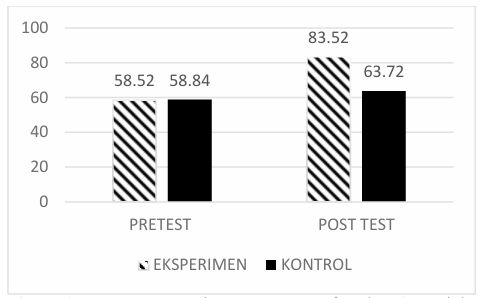
Creativity is a key competency that needs to be developed through Biology learning to meet the demands of twenty-first-century education. This study aims to determine the effect of Problem-Based Learning (PBL) assisted by animated video on students’ creativity in Biology learning. The study employed a quantitative quasi-experimental design with a nonequivalent control group design, involving 50 Grade XI students divided into experimental and control classes. Data were collected using pretest and posttest instruments based on four creativity indicators, fluency, flexibility, originality, and elaboration, and analyzed using ANCOVA with pretest scores as covariates. The results show that students’ creativity in the experimental class increased significantly compared to the control class, with ANCOVA indicating a significant treatment effect (p < 0.05) and a large effect size. It can be concluded that PBL, assisted by animated video, is more effective than conventional learning at enhancing students’ creativity. These findings suggest that integrating problem-based learning with interactive digital media can be an effective strategy for fostering creativity and supporting the implementation of innovative, student-centered Biology learning.
Keywords:
animated video biology learning creativity problem based learning quasi-experimental designReferences
Darna, N., & Herlina, E. (2018). Choosing the right research method: for research in the field of management science. Journal of Management Science Econology, 5(1), 287-292. http://dx.doi.org/10.2827/jeim.v5i1.1359
Hasanah, N., Cholily, Y. M., & Syaifuddin, M. (2023). Meta-analysis: Computational thinking abilities in learning biology. Journal of Research, Education and Learning, 18(37). https://riset.unisma.ac.id/index.php/jp3/article/view/23518
Herawadini, F., Setiadi, D., Lestari, T. A., & Handayani, B. S. (2026). The effect of problem-based learning assisted by animated videos on computational thinking skills in biology learning for Grade XI students of SMA Negeri 10 Mataram. Journal of Classroom Action Research, 8(1), 1–9. https://jppipa.unram.ac.id/index.php/jcar/article/view
Husna, M., Syaifuddin, M., & Kurniawati, D. (2025). Conventional learning strategies in improving students' creativity. As-Salam Journal, 9(1), 110–118. https://jurnal-assalam.org/index.php/JAS/article/view
Jainab, J., Audia, A. V., Safitri, Y., Yuli, Y., Ramadhan, M. N., Rahmawati, S., & Putra, A. P. (2025). Utilization of technological media through a cooperative approach in biology learning to improve learning outcomes and learning processes of senior high school students. Journal of Bio-Creaducation, 2(1). DOI: http://dx.doi.org/10.20527/bioco.v2i1.14129
Jannah, A. U., Hasthiolivia, C., Azis, M. N., & Aprinastuti, C. (2023). Implementation of computational thinking through the problem-based learning model in science subjects in elementary school. Creative of Learning Students Elementary Education, 6(3), 416–423. https://doi.org/10.22460/collase.v6i3.17454
Kotimah, E. K. (2024). Improving science education: exploring the impact of Powtoon animated videos in science instruction. Katera: Journal of Science and Technology, 1(1), 5–12. Access link: https://id.scribd.com/document/915845400/5-12-26-530-Article-Text-3858-1-4-20221212
Lockwood, J., & Mooney, A. (2017). Computational thinking in education: Where does it fit? A systematic literary review. arXiv preprint arXiv:1703.07659. https://arxiv.org/abs/1703.07659
Malkan, M., Setiadi, D., Lestari, T. A., & Handayani, B. S. (2023). The effect of the Problem Based Learning model assisted by Powtoon animated videos on scientific literacy of Grade XI science students at MAN 2 Mataram. Scientific Journal of Educational Profession, 8(1b), 995-1000. https://doi.org/10.29303/jipp.v8i1b.1336
Marhaeni, N. H., & Wulanningtyas, M. E. (2021). Needs analysis of interactive learning media to improve students' problem-solving skills. National Education Conference, 3(2), 173-179. https://scholar.google.co.id/scholar?hl=en&as_sdt=0%2C5&q=Marhaeni%2C+N.+H.%2C+%26+Wulanningtyas%2C+M.+E.+%282021%29.+Analisis+kebutuhan+media+pembelajaran+interaktif+untuk+meningkatkan+kemampuan+pemecahan+masalah+siswa.+Kopen%3A+Konferensi+Pendidikan+Nasional%2C+3%282%29%2C+173%E2%80%93179&btnG=
Masrinah, E. N., Aripin, I., & Gaffar, A. A. (2019). Problem Based Learning (PBL) to improve critical thinking skills. Proceedings of the National Education Seminar, 1, 924–932. https://prosiding.unma.ac.id/index.php/semnasfkip/article/view/129
Ministry of Education, Culture, Research, and Technology. (2022). 2022 Performance Report. https://biroumumpbj.kemendikdasmen.go.id/view/files/Laporan%20Kinerja%20Tahun%202022.pdf
Napitupulu, C. N., & Syahputra, E. (2023). Development of interactive mathematics learning media for Android applications based on RME through a blended learning approach. In National Seminar of the Mathematics Department 2023. https://digilib.unimed.ac.id/id/eprint/58518/
Nasution, K., Pohan, K. R. D., & Harahap, V. O. P. (2024). Characteristics, challenges, and learning strategies in the digital era. Equatorial Education and Learning Journal. https://doi.org/10.26418/jppk.v1i01.87465
Nurasiah, Paristiowati, M., Erdawati, & Afrizal. (2023). Integration of Technology in Problem-Based Learning to Improve Students Computational Thinking: Implementation on Polymer Topics. International Journal of Social and Management Studies, 4(2), 65–73. https://doi.org/10.5555/ijosmas.v4i2.280
OECD. (2023). PISA 2022 Results (Volume I): The State of Learning and Equity in Education. OECD Publishing. https://doi.org/10.1787/53f23881-en
OECD. (n.d.). Education GPS: Indonesia Student performance (PISA 2022). https://gpseducation.oecd.org/CountryProfile?primaryCountry=IDN&topic=PI
Rahayu, N. P. S. (2023). Development of animated video-based learning multimedia using the Animaker application on the topic of the human respiratory system for Grade VIII. https://jurnal.usi.ac.id/index.php/jpbm/issue/view/32
Ramanda, E., Indriani, M. N., & Pramesti, S. L. D. (2022, September). Analysis of students' critical thinking skills in solving computational mathematics problems of Grade XII social science students at SMAN 11 Semarang. In SANTIKA: National Seminar of Mathematics
Tadris (Vol. 2, pp. 85-92). https://proceeding.uingusdur.ac.id/index.php/santika/article/download/798/350
Saragih, E. M., & Sirait, S. (2023). The effect of using Plotagon-based animation media to improve student learning outcomes. Journal of Mathematics and Science Education, 13(4), 1005–1011. https://doi.org/10.37630/jpm.v13i4.1265
Sari, A. Q., Sukestiyarno, Y. L., & Agoestanto, A. (2017). Prerequisite limits for normality tests and homogeneity tests in linear regression models. Unnes Journal of Mathematics, 6(2), 168–177. https://doi.org/10.15294/ujm.v6i2.11887
Sofyan, H., & Komariah, K. (2016). Problem based learning in the implementation of the 2013 curriculum in vocational high schools. Journal of Vocational Education, 6(3), 260-271. https://doi.org/10.21831/jpv.v6i3.11275
Su, J., & Yang, W. (2023). A systematic review of integrating computational thinking in early childhood education. Computers and Education Open, 4, 100122. https://doi.org/10.1016/j.caeo.2023.100122
Sukestiyarno, Y. L., & Agoestanto, A. (2017). Prerequisite limits for normality tests and homogeneity tests in linear regression models. Unnes Journal of Mathematics, 6(2), 168-177. https://doi.org/10.15294/ujm.v6i2.11887
Sukmadinata, N. S. (2017). Educational research methods. PT Remaja Rosdakarya.
Trisnawati, T., Ardhuha, J., Verawati, N. N. S. P., & Hikmawati, H. (2024). The effect of problem-based learning model assisted by animation media on students' learning outcomes in dynamic fluid material. Scientific Journal of Educational Profession, 9(4), 2597-2607. https://doi.org/10.29303/jipp.v9i4.2791
Wu, T. T., Asmara, A., Huang, Y. M., & Permata Hapsari, I. (2024). Identification of problem-solving techniques in computational thinking studies: Systematic literature review. Sage Open, 14(2), 21582440241249897. https://journals.sagepub.com/doi/10.1177/21582440241249897